Colour
Ash Brown or Milk Tea Hair Colour for Malaysian Skin Tones
Ash brown and milk tea hair colour have both had their moment on Malaysian social media, and honestly, both are still going strong. Walk through any…
Premium Old Skool Salon30 September 20266 min read
Ash brown and milk tea hair colour have both had their moment on Malaysian social media, and honestly, both are still going strong. Walk through any mall in Kuala Lumpur or Ampang and you'll spot both shades everywhere, often on people with very different skin tones and very different results. That's the thing about these two colours: they're frequently discussed as if they're interchangeable "trendy brown" options, but they behave quite differently once they're actually on Malaysian hair under Malaysian sunlight.
This guide breaks down what each colour really looks like, who tends to suit which, and what maintenance to expect in our climate.
What Is Ash Brown Hair Colour?
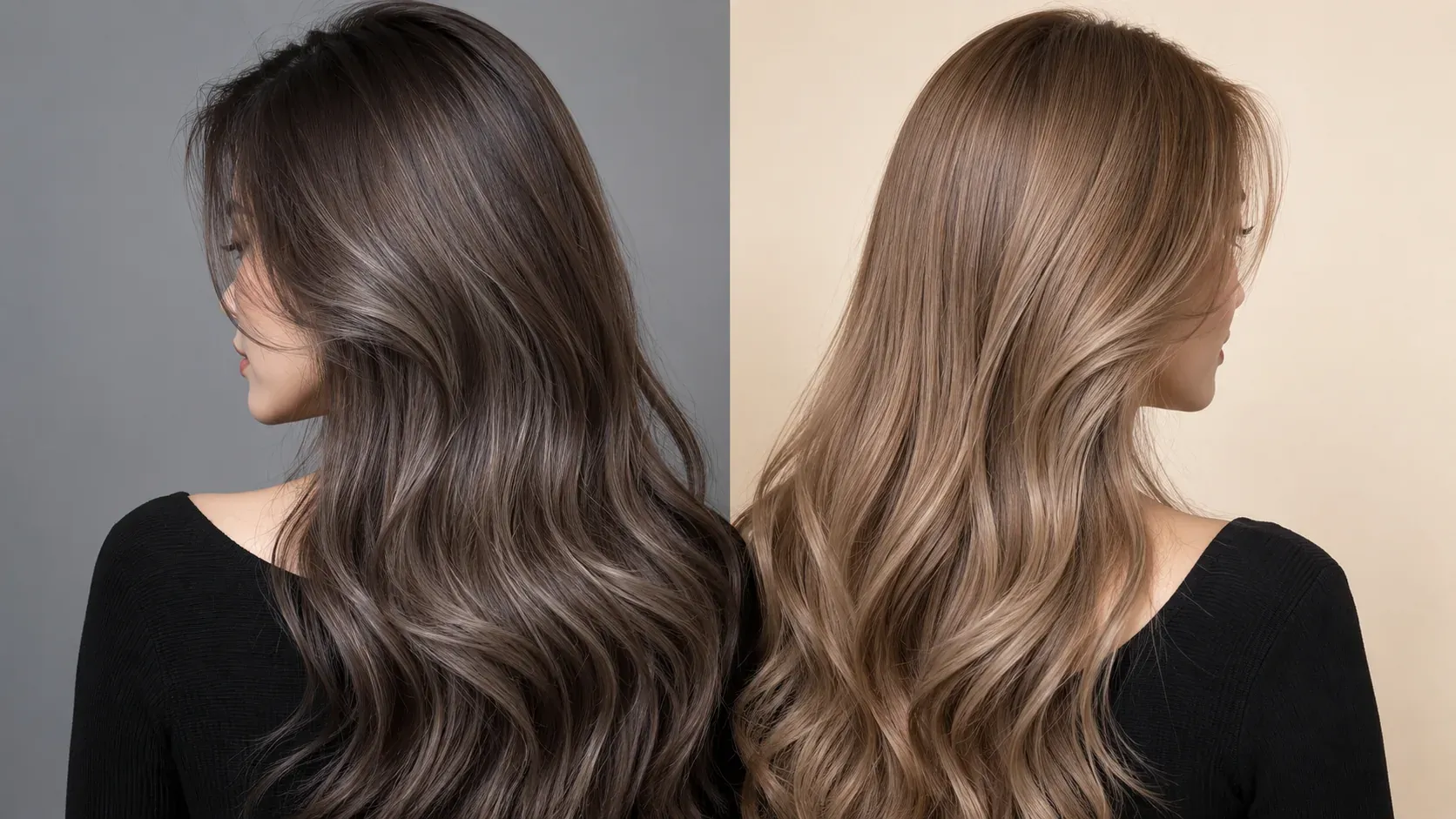
Ash brown is a cool-toned brown that neutralises red and orange undertones in the hair, giving a smoky, muted finish rather than a warm, golden one. It typically sits in the medium brown range on the colour chart but with added blue or green-based pigment to counteract warmth.
Visual character: Smoky, slightly greyish-brown, cooler and more muted than a natural chestnut or chocolate brown.
What Is Milk Tea Hair Colour?
Milk tea hair colour is a lighter, softer brown with warm-neutral undertones, resembling the colour of, unsurprisingly, milk tea. It usually combines beige and light golden-brown tones for a soft, diffused look rather than a bold, saturated one.
Visual character: Soft, creamy light brown, warmer and gentler than ash tones, often with a slightly greyish-beige finish that avoids looking overly golden or brassy.
Side-by-Side Comparison
| Factor | Ash Brown | Milk Tea Brown |
|---|---|---|
| Undertone | Cool (blue/green-based) | Warm-neutral (beige/golden-based) |
| Visual effect | Smoky, muted | Soft, creamy, gentle |
| Lightening required | Moderate to significant, depending on starting shade | Moderate to significant, usually needs a lighter base |
| Best base to start from | Medium to dark brown hair | Works well pre-lightened to a golden or light brown base |
| Maintenance | Ash tones fade toward warm/brassy, need toning refreshes | Fades toward lighter, warmer tones over time |
| Suits skin undertone | Often flatters cool and neutral undertones | Often flatters warm and neutral undertones |
Does Ash Brown or Milk Tea Need Bleaching?
Both colours typically require some degree of lightening if you're starting from naturally dark Asian hair, since both are lighter and more nuanced than a natural black or deep brown base. The extent depends on your current hair colour:
- If your hair is already medium brown (chemically treated or naturally lighter), less lightening is needed
- If your hair is naturally black or very dark brown, achieving a clear ash or milk tea result usually requires pre-lightening to a lighter base first, then toning to the desired shade
If you'd prefer to avoid bleaching altogether, a deposit-only, muted brown with cooler or warmer undertones can approximate the mood of these colours without lifting the base significantly, though the effect will be subtler and closer to your natural depth.
Which Skin Undertone Suits Which Colour?
This is the part that matters most and gets overlooked the most. Malaysian skin tones span a wide range, and undertone (not just how fair or deep the skin is) plays the biggest role in which colour looks most flattering.
Cool undertones (pink, rosy, or blue-ish undertone visible on the wrist veins)
- Ash brown tends to harmonise well, since the cool pigment in the hair complements cool pigment in the skin
- Milk tea can still work but may look slightly washed out on very fair, cool-toned skin if the shade is too light
Warm undertones (golden, peachy, yellow-based undertone)
- Milk tea brown tends to be more flattering, as the warm-beige tones echo the skin's natural warmth
- Ash brown can sometimes make warm undertones look slightly sallow or contrast oddly if the ash pigment is too strong
Neutral undertones (a balanced mix, neither clearly warm nor cool)
- Both colours tend to work well, giving more flexibility to choose based on personal preference rather than strict undertone matching
| Undertone | Better Suited Colour | Why |
|---|---|---|
| Cool (pink/rosy) | Ash brown | Cool hair tone complements cool skin tone |
| Warm (golden/peachy) | Milk tea brown | Warm-beige tone echoes skin warmth |
| Neutral | Either | Flexibility to choose by preference |
A simple way to check your undertone at home: look at the veins on your inner wrist in natural daylight. Blue or purple veins generally suggest cool undertones; green veins suggest warm undertones; a mix suggests neutral.
How Each Colour Behaves in Malaysian Sunlight and Humidity
Malaysia's strong, near-constant UV exposure and humidity affect both colours, but in slightly different ways.
Ash brown tends to fade toward warmer, brassier tones over time because ash pigments (violet/blue-based) fade faster than the underlying warm pigment in hair, especially with UV exposure and frequent washing. This means ash brown often needs more frequent toning refreshers to stay looking cool and smoky rather than drifting orange.
Milk tea brown tends to fade more gently since it starts closer to a warm-neutral base, though prolonged sun exposure can still lighten and warm it further, sometimes pushing it toward a more golden tone than originally intended.
Maintenance Routine for Both Colours
| Care Step | Why It Matters |
|---|---|
| Purple or blue-toned shampoo (for ash brown) | Counteracts brassiness and helps maintain the cool tone between salon visits |
| Colour-safe, sulphate-free shampoo (for both) | Slows overall colour fading |
| UV-protectant hair spray | Reduces sun-related colour breakdown, important given Malaysia's year-round UV intensity |
| Toning gloss touch-up every 4 to 6 weeks | Refreshes tone before it visibly shifts warm or fades unevenly |
| Deep conditioning weekly | Lightened hair is more porous and needs added moisture to stay healthy in humid weather |
| Lukewarm water washing | Reduces colour and moisture loss compared to hot water |
A Note on Hair Health Before Choosing Either Shade
Both ash brown and milk tea generally require lightening to achieve a clean, accurate result on dark Asian hair. This means:
- Hair that has been previously bleached, permed or rebonded needs an honest condition assessment before adding more chemical processing
- A strand test is worth requesting if you're unsure how your hair will respond
- Multiple shorter sessions to lighten gradually are often gentler than one aggressive lightening session, particularly for those wanting to reach the lighter, softer base that milk tea tones need
Frequently Asked Questions
Can I get ash brown or milk tea without any bleaching?
A muted, low-lift version of either tone is possible with deposit-only colour, but the true smoky or creamy effect typically needs some lightening to show clearly on dark hair.
Which colour is easier to maintain in Malaysia's climate?
Milk tea tends to fade more gently and predictably, while ash brown requires more frequent toning to prevent brassiness from developing under our strong sun.
Will either colour suit deep skin tones?
Yes. Skin depth matters less than undertone. Deep skin with warm undertones often looks beautiful with milk tea, while deep skin with cool undertones can look striking with ash brown.
How do I know which undertone I have?
Checking wrist vein colour in natural light, or asking your colourist during consultation, are both reliable, simple ways to identify undertone before committing to a shade.
Final Thoughts
Ash brown and milk tea are both beautiful, wearable colours, but they aren't universally interchangeable. Ash brown leans cool and smoky, suiting cooler undertones and needing more frequent toning to fight brassiness in our sun. Milk tea leans warm-neutral and creamy, suiting warmer undertones and fading a little more gracefully. The right choice comes down to your skin's undertone, your hair's current condition, and how much upkeep you're realistically willing to commit to.