Colour
Grey Hair Coverage Options Compared for Malaysians
Grey hair tends to show up earlier and more visibly on dark Asian hair than on naturally lighter hair, simply because of the stark contrast between…
Premium Old Skool Salon3 October 20267 min read
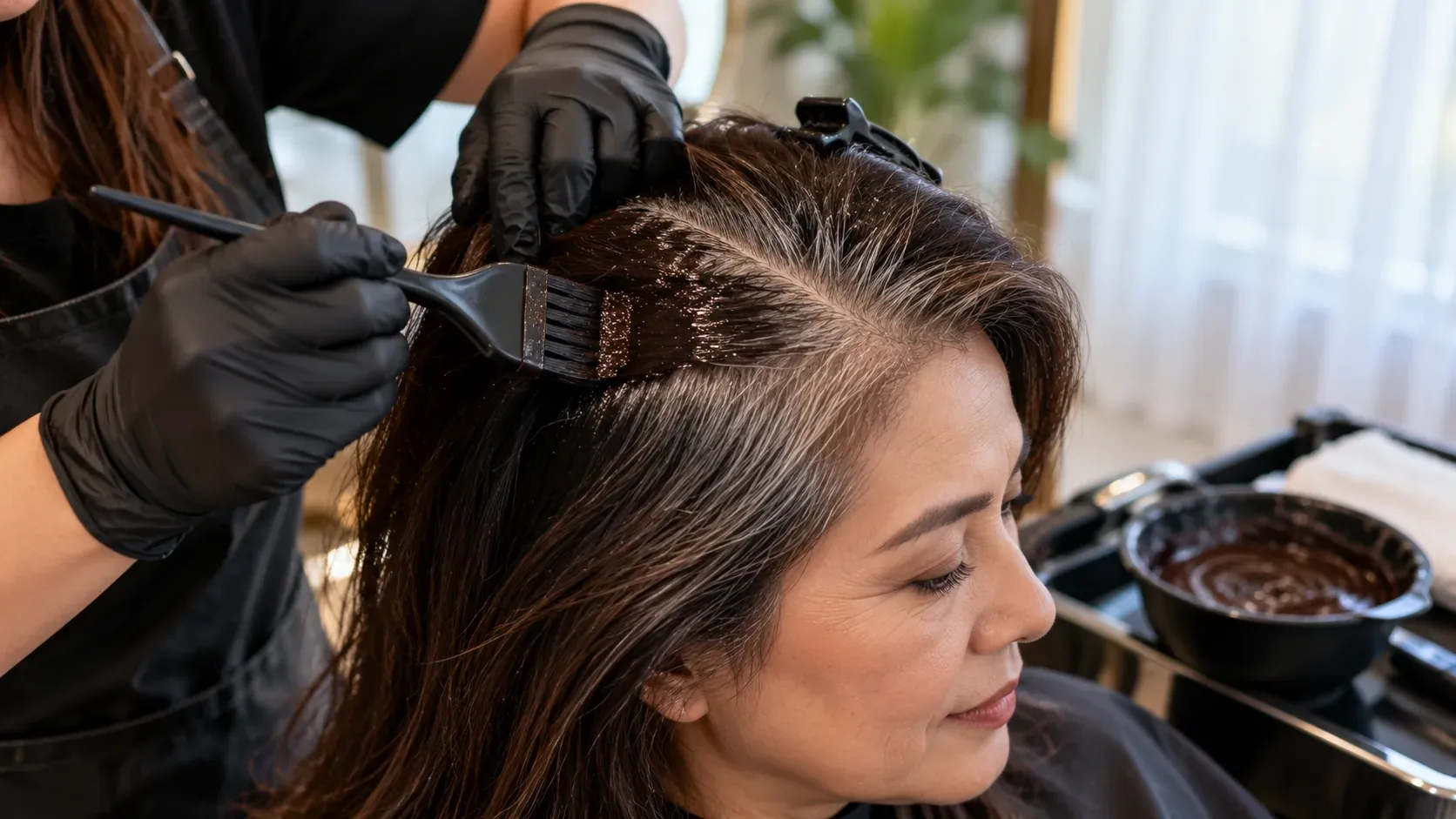
Grey hair tends to show up earlier and more visibly on dark Asian hair than on naturally lighter hair, simply because of the stark contrast between grey and the deep black or dark brown that most Malaysians start with. For many people, that first grey strand around the temples in their 30s (sometimes even earlier) triggers an immediate search for coverage options. The problem is that most advice out there isn't written with dark, dense Asian hair in mind, and the "best" option genuinely depends on how much grey you have, how fast it's growing, and how much upkeep you're willing to commit to.
Here's a practical comparison of the main grey coverage options available at Malaysian salons, and how to choose between them.
Why Grey Hair Is Trickier to Cover Than Regular Colour
Grey and white hair strands have little to no melanin, which changes how they absorb colour compared to pigmented hair. This means:
- Grey hair often needs different processing time or technique to take colour evenly
- Regular colour applied the same way as on pigmented hair can result in patchy, uneven, or faded-looking grey coverage
- Root regrowth is more visually obvious with grey hair than with colour-on-colour touch-ups, since the contrast between grey roots and coloured lengths is much sharper than dark roots under a similar shade
This is why grey coverage is usually treated as its own category of service, rather than just "regular hair colour," even at the same salon.
Option 1: Permanent Colour (Full Grey Coverage)
This is the most common and most complete solution, using standard permanent hair dye formulated to fully cover grey strands.
How it works: Permanent colour opens the hair cuticle and deposits pigment directly into the hair shaft, covering grey by essentially replacing the lack of natural pigment with artificial colour.
| Pros | Cons |
|---|---|
| Full, even coverage even with significant grey percentage | Root regrowth becomes visible faster and more sharply than with pigmented hair |
| Wide range of shades available | Requires touch-ups typically every 3 to 5 weeks depending on growth rate |
| Long-lasting, doesn't wash out | Repeated processing on the same hair over years can affect hair condition without proper care |
Best for: People with more than 30 to 40% grey coverage who want a complete, natural-looking result.
Option 2: Semi-Permanent Grey Coverage
Semi-permanent colour deposits pigment onto the hair without significantly opening the cuticle, offering a gentler, temporary coverage option.
| Pros | Cons |
|---|---|
| Gentler on hair, less cumulative processing | Grey coverage tends to be less complete, especially on very white or resistant strains |
| Fades gradually rather than showing a harsh root line | Needs more frequent refreshing, often every 3 to 4 weeks |
| Lower commitment, easier to stop or change | Not ideal for extensive grey coverage needs |
Best for: People with early, scattered greys (under 20 to 30%) who want a lighter-touch solution.
Option 3: Grey Blending (Highlights/Lowlights Approach)
Rather than fully covering grey, this technique blends grey strands into the surrounding hair using strategically placed highlights or lowlights, making regrowth far less noticeable.
How it works: A colourist adds lighter pieces (highlights) or slightly darker pieces (lowlights) around the grey areas so the grey blends in as texture and dimension rather than standing out as a stark colour difference.
| Pros | Cons |
|---|---|
| Regrowth is much less obvious, extending time between salon visits | Doesn't fully "hide" grey, some visible grey remains as part of the blended look |
| Lower maintenance overall | Requires a skilled colourist for the technique to look natural |
| Softer, more natural transition as more grey appears over time | May cost more per session due to the technique involved |
Best for: People who are comfortable with some visible grey but want it to look intentional and blended rather than patchy, or those transitioning away from regular full-colour maintenance.
Option 4: Root Touch-Up Sprays and Powders (Between Salon Visits)
These aren't salon treatments themselves, but many Malaysians use them to extend time between appointments.
| Pros | Cons |
|---|---|
| Instant, temporary root coverage | Washes out with the next shampoo, not a real solution |
| Useful for special occasions between touch-ups | Can look obvious or powdery if overused or applied poorly |
| Affordable and convenient | Not a substitute for proper colour maintenance |
Best for: Bridging the gap between salon appointments, not as a primary grey coverage strategy.
Comparing All Options at a Glance
| Method | Coverage Completeness | Maintenance Frequency | Damage Level | Best Grey Percentage |
|---|---|---|---|---|
| Permanent colour | Full | Every 3 to 5 weeks | Moderate, cumulative over time | 30%+ |
| Semi-permanent | Partial to moderate | Every 3 to 4 weeks | Low | Under 30% |
| Grey blending | Partial, blended look | Every 6 to 10 weeks | Moderate | Any, especially scattered greys |
| Root touch-up spray/powder | Temporary, surface only | As needed, washes out same day | None | Any, as a stopgap only |
How Malaysian Climate Affects Grey Coverage Maintenance
Humidity and frequent sweating don't directly affect how grey coverage takes, but they do influence overall hair health and how often washing is needed, which in turn affects how quickly colour fades:
- Frequent washing due to heat and humidity can accelerate colour fading, particularly for semi-permanent options
- Sun exposure, which is intense and near-constant in Malaysia, can also lighten and dull colour over time, meaning grey-covering colour may need slightly more frequent refreshing here than in cooler, less sunny climates
- A UV-protectant spray and colour-safe shampoo help extend the life of grey coverage regardless of which method you choose
Choosing Based on Your Grey Pattern
| Your Grey Pattern | Suggested Approach |
|---|---|
| A few scattered greys, mostly at temples | Semi-permanent colour or grey blending |
| Grey concentrated at the crown/part line | Root-focused touch-ups combined with all-over semi-permanent or permanent colour |
| Significant, even grey coverage (40%+) | Full permanent colour for the most reliable, complete result |
| Wanting to transition to embracing natural grey | Grey blending as a gradual, lower-maintenance transition strategy |
Talking to Your Colourist About Grey Coverage
Since grey hair behaves differently from pigmented hair during colouring, it helps to mention specifically:
- Roughly what percentage of your hair is grey
- Whether the grey is evenly distributed or concentrated in certain areas
- Whether you want full, opaque coverage or a softer, blended look
- How much maintenance and touch-up frequency you're realistically willing to commit to
This helps your colourist choose the right formulation, processing time, and technique, since grey coverage often needs slightly different handling than a standard colour appointment, even when using a similar target shade.
Maintaining Grey Coverage Between Salon Visits
- Use colour-safe, sulphate-free shampoo to slow fading
- Apply a UV-protectant spray, especially important in Malaysia's strong sun
- Avoid excessive hot water washing, which accelerates colour loss
- Consider a toning gloss between full colour appointments if greys start looking dull or off-tone rather than simply regrown
Frequently Asked Questions
Is grey hair harder to colour than regular hair?
Yes, grey and white strands lack melanin and can be more resistant to taking colour evenly, which is why grey coverage often uses different processing techniques than standard colour services.
How often will I need touch-ups for full grey coverage?
Typically every 3 to 5 weeks, depending on your natural hair growth rate and how quickly regrowth becomes noticeable against your chosen shade.
Can grey blending work if I have a lot of grey hair already?
It can, but the technique works best and looks most natural with moderate, evenly distributed grey. Very extensive grey coverage may benefit more from full permanent colour instead.
Is semi-permanent colour a good long-term solution for grey hair?
It works well for lighter grey coverage needs, but for more extensive greys, most people find the frequent reapplication less convenient than permanent colour over the long run.
Final Thoughts
There's no single best way to cover grey hair, the right choice depends on how much grey you have, how it's distributed, and how much salon maintenance fits realistically into your routine. Permanent colour offers the most complete coverage, semi-permanent suits lighter, early greying, and grey blending offers a lower-maintenance, more natural-looking middle ground. A proper consultation, where your colourist can actually see your grey pattern and hair condition, remains the best way to land on the right approach for you.