Hair Care
Low Maintenance Haircuts for Hijab Wearing Women in Malaysia
A common assumption is that since hijab-wearing women's hair isn't constantly on display, haircuts and styling don't matter much. In reality, the…
Premium Old Skool Salon3 October 20268 min read
A common assumption is that since hijab-wearing women's hair isn't constantly on display, haircuts and styling don't matter much. In reality, the opposite is often true. Hair under the hijab deals with unique conditions, extended coverage, trapped heat and moisture, less airflow, and often less daily styling attention, which means the right haircut actually matters more for comfort, hair health, and ease of care, not less.
This guide looks at haircut options genuinely suited to life under the hijab in Malaysia's climate, focusing on what actually makes a cut low-maintenance in this context, not just what looks good unveiled in the salon mirror.
What "Low-Maintenance" Really Means for Hijab-Wearing Hair
For many people, low-maintenance means minimal styling time. For hijab-wearing women, it often means something slightly different:
- Hair that doesn't create bulk or discomfort under the hijab fabric
- A cut that doesn't require daily styling since it won't be seen most of the day
- Length and layering that make hair easy to tie up neatly under an underscarf
- A style that still looks good on the occasions hair is uncovered, at home, with family, or at women-only gatherings
- Reduced tangling and easier detangling, since hair spends long hours compressed and covered
Keeping these priorities in mind changes what "the best cut" actually looks like compared to general haircut advice.
Best Low-Maintenance Cut Options
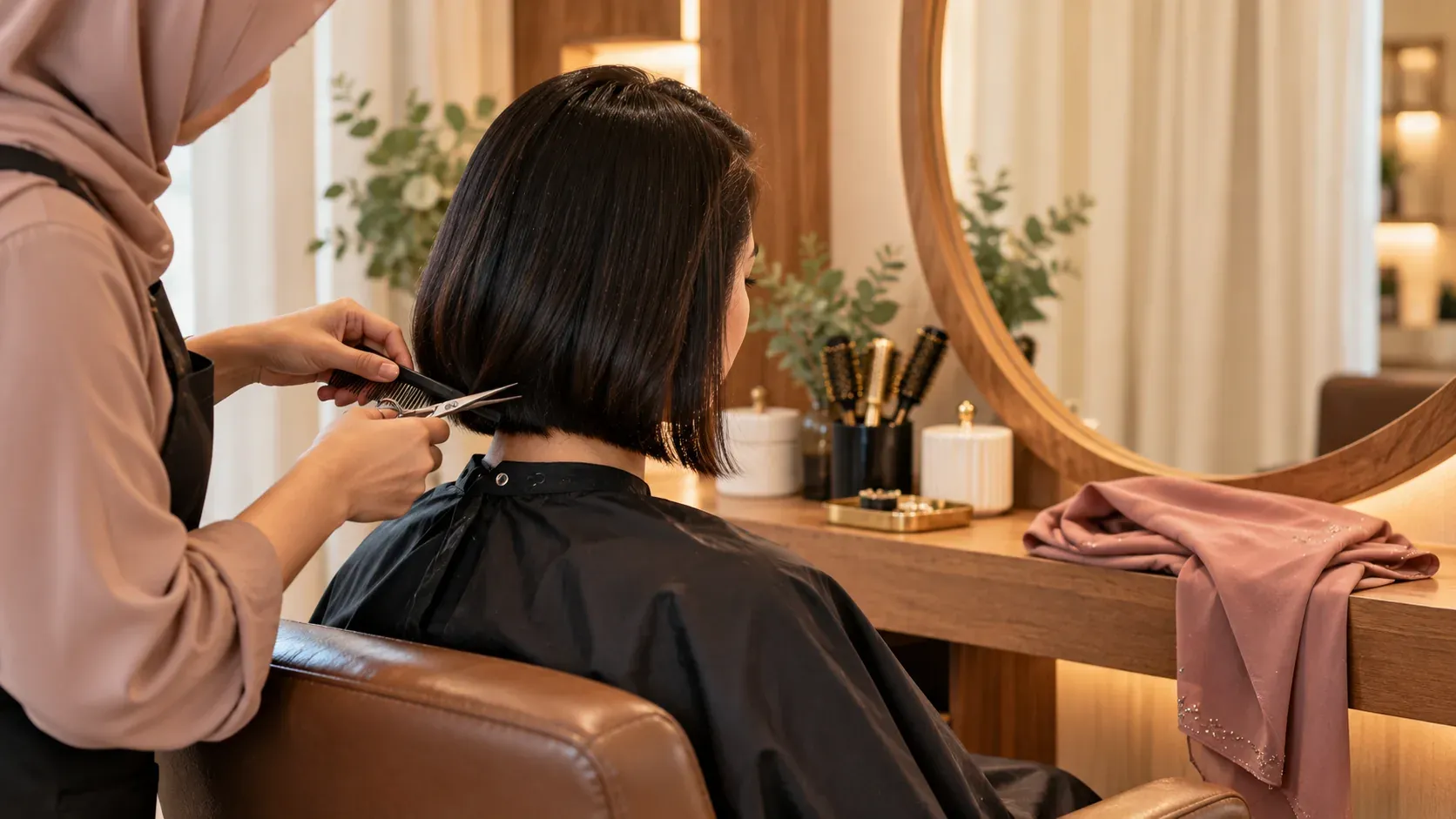
1. Blunt Bob (Chin to Shoulder Length)
A clean, blunt bob is a popular choice precisely because it sits neatly under the hijab without excess bulk, doesn't require much daily styling since it's rarely visible, and still looks polished and put-together on uncovered occasions.
Why it works: Minimal layering means less frizz management, and the shorter length reduces tangling from being compressed under fabric all day.
Consideration: Very short bobs can sometimes be trickier to tie back fully if you need to, so a slightly longer chin-to-collarbone length offers more flexibility.
2. Long Layers (Shoulder Length and Below)
For those who prefer longer hair, adding long, soft layers rather than keeping hair completely blunt reduces bulk and weight, especially helpful for thick, dense Asian hair that can otherwise feel heavy and hot under a hijab in Malaysia's climate.
Why it works: Layers reduce overall volume without needing much upkeep, and longer length still ties back easily into a low bun or ponytail for practical daily wear.
Consideration: Longer hair does require slightly more effort for detangling and washing, so this suits those willing to spend a bit more time on hair wash days, even if daily styling stays minimal.
3. Textured Lob (Long Bob)
A lob, sitting around collarbone length, strikes a balance between the low-bulk benefits of a bob and the tie-back flexibility of longer hair.
Why it works: Works well for both those who like occasionally leaving hair loose at home and those who prefer to always tie it up under the underscarf.
Consideration: Slight texturising or point-cutting at the ends helps prevent a heavy, blunt edge from feeling too thick when tied up.
4. Short Crop or Pixie-Adjacent Cuts
For those prioritising maximum ease and minimal hair volume under the hijab, especially helpful in Malaysia's heat and humidity, a short crop offers genuine low maintenance.
Why it works: Minimal hair means minimal heat retention, easier washing, and virtually no styling required day-to-day since it's fully covered anyway.
Consideration: This is a more personal, bold choice and works best for those who are comfortable with shorter hair even when uncovered at home or among family.
Comparing the Options
| Cut | Bulk Under Hijab | Styling Effort Needed | Best For |
|---|---|---|---|
| Blunt bob | Low | Minimal | Balance of polish and practicality |
| Long layers | Moderate | Low to moderate | Those who prefer longer hair but want less weight and heat |
| Textured lob | Low to moderate | Minimal | Versatility between tied-up and occasionally loose styling |
| Short crop | Very low | Very minimal | Maximum comfort and ease in heat and humidity |
Why Layering and Thinning Matter More Than Length
Regardless of which length you choose, how your hair is layered or thinned out affects comfort under the hijab significantly, especially for the thick, dense hair common among Malaysian women. Heavily blunt cuts without any layering can feel bulky and hot when tied up and covered for extended periods, while some strategic layering or thinning:
- Reduces overall volume without dramatically changing the visible length
- Makes hair easier to gather into a neat, flat bun or ponytail
- Improves airflow slightly, which matters over a full day of coverage in Malaysia's heat
Mentioning to your stylist that your hair is mostly worn under a hijab, and how you typically tie it up, helps them cut and layer specifically for that daily reality rather than for how hair falls loose, which is largely irrelevant to your day-to-day experience.
Scalp and Hair Health Considerations Specific to Hijab Wear
Extended coverage changes the environment your scalp and hair deal with daily, which is worth factoring into your overall hair care routine, not just the haircut itself:
- Reduced airflow and trapped heat can increase oil production, making an oily scalp more likely to develop compared to hair that's regularly exposed to open air
- Friction from fabric against the hairline and scalp throughout the day can contribute to breakage if hair isn't handled gently
- Tight styling for a neat fit under the underscarf, if done daily without variation, can gradually stress the hairline over time
A few practical adjustments help offset these factors:
- Rotate how tightly and where you tie your hair day to day, rather than always pulling from the exact same point
- Choose breathable underscarf materials where possible
- Wash underscarves regularly, since sweat and product buildup transfer back onto hair and scalp
- Consider a periodic scalp treatment if oiliness or flaking becomes a recurring issue, since covered hair often needs more attention here than uncovered hair
Styling for the Occasions Hair Is Uncovered
Even with a genuinely low-maintenance cut chosen for daily practicality, most hijab-wearing women still want hair that looks good at home, among close family, or at women-only events. The cuts above are chosen specifically because they hold up well both ways:
- A blunt bob or lob looks clean and polished loose, without needing much styling effort
- Long layers give natural movement and softness for special occasions without requiring elaborate styling
- Even a short crop can look intentional and chic with minimal effort, rather than requiring daily styling attention
This dual consideration, practical under the hijab and presentable when uncovered, is really the core of what makes a cut genuinely low-maintenance for this specific lifestyle, rather than just "easy" in a generic sense.
Talking to Your Stylist
To get a cut that actually works for your daily reality, it helps to mention:
- That your hair is primarily worn under a hijab
- How you typically style it day-to-day (bun, ponytail, braid)
- Whether you want it to also look good loose for specific occasions
- Any scalp concerns related to extended coverage, like oiliness or itchiness
This context changes how a stylist approaches layering, length, and even where face-framing pieces (if any) are placed, since visibility around the face is different when hair is mostly covered by an underscarf and hijab.
Frequently Asked Questions
Do layers make hijab-covered hair harder to manage?
Generally the opposite. Soft layering reduces bulk and makes hair easier to gather neatly, especially for thick hair, as long as the layering isn't too choppy or difficult to tie back smoothly.
How often should hijab-wearing women get haircuts?
Similar to general guidance, roughly every 8 to 12 weeks to maintain shape and prevent split ends, though this can vary based on how fast your hair grows and how the ends are holding up.
Does wearing a hijab all day make hair grow slower?
There's no strong evidence that hijab-wearing directly slows hair growth, though scalp health, tension from tight styling, and hair care habits do influence how healthy the hair looks and how well it retains length.
What's the most practical length for very active daily routines?
A blunt bob or textured lob tends to offer the best combination of low daily maintenance, easy tie-back options, and minimal bulk under the hijab for most active lifestyles.
Final Thoughts
Choosing a haircut as a hijab-wearing woman isn't just about what looks good in the mirror before you leave the house, it's about what feels comfortable, manageable, and healthy through a full day of coverage in Malaysia's heat and humidity. A blunt bob, soft long layers, a textured lob, or a short crop can each work beautifully depending on your priorities, and a stylist who understands your daily styling reality will help you land on the cut that genuinely reduces effort, not just one that photographs well.