Treatments
Salon Scalp Treatment for Oily Scalp and Dandruff
If you've ever washed your hair in the morning only to feel your scalp getting oily by the afternoon, you're far from alone. Malaysia's heat and…
Premium Old Skool Salon1 October 20267 min read
If you've ever washed your hair in the morning only to feel your scalp getting oily by the afternoon, you're far from alone. Malaysia's heat and humidity push sebaceous glands into overdrive, and combined with pollution, motorcycle helmets, hijab or cap wear, and daily commuting sweat, oily scalp and dandruff are two of the most common concerns Malaysian salons hear about. Yet most people only ever treat the hair, not the scalp underneath it, which is often where the real problem starts.
This guide explains what causes oily scalp and dandruff in our climate, how salon scalp treatments actually work, and how to keep results going between visits.
Why Malaysian Weather Makes Scalp Issues Worse
Sebum production, the natural oil your scalp produces, increases in hot and humid conditions as the body tries to regulate temperature and moisture. Add in:
- Sweat from outdoor heat and humidity
- Pollution and dust accumulating on the scalp during commutes
- Extended headscarf, cap or helmet wear trapping heat and moisture
- Product buildup from styling products used more frequently due to frizz-fighting routines
and it's easy to see why an oily scalp in Malaysia behaves differently than the same scalp type would in a cooler, drier country. Dandruff, meanwhile, can stem from several different root causes, not just dryness, which is why it doesn't always respond to switching shampoos alone.
Oily Scalp vs Dandruff: Are They the Same Thing?
Not exactly, though they often occur together and get confused.
| Condition | What's Actually Happening | Common Signs |
|---|---|---|
| Oily scalp | Overactive sebaceous (oil) glands | Greasy roots within a day of washing, flat volume, product not absorbing well |
| Dry dandruff | Flaking due to scalp dryness or irritation | White, small, dry flakes; scalp may feel tight or itchy |
| Seborrhoeic dandruff | Related to yeast (Malassezia) overgrowth, often on an oily scalp | Yellowish, oily-looking flakes, redness, itchiness, sometimes on eyebrows or sides of nose too |
| Scalp psoriasis or eczema | Underlying skin condition, not just a cosmetic issue | Thick, scaly patches, may need dermatologist involvement |
It's entirely possible, and actually quite common, to have an oily scalp with dandruff at the same time, since some dandruff types thrive specifically in oily conditions. A proper scalp analysis, rather than guessing from a shampoo aisle, helps identify which category you're actually dealing with.
What a Salon Scalp Treatment Typically Involves
Scalp treatments differ from a regular shampoo wash in both depth and purpose. A typical salon scalp treatment session usually includes:
- Scalp analysis - some salons use a scalp scope or magnified camera to check oil levels, flaking, and follicle condition before recommending treatment
- Deep cleansing shampoo - formulated to break down oil and product buildup more thoroughly than daily shampoo
- Scalp exfoliation - removing dead skin cells and buildup at the root level, often using a gentle scrub or peeling treatment
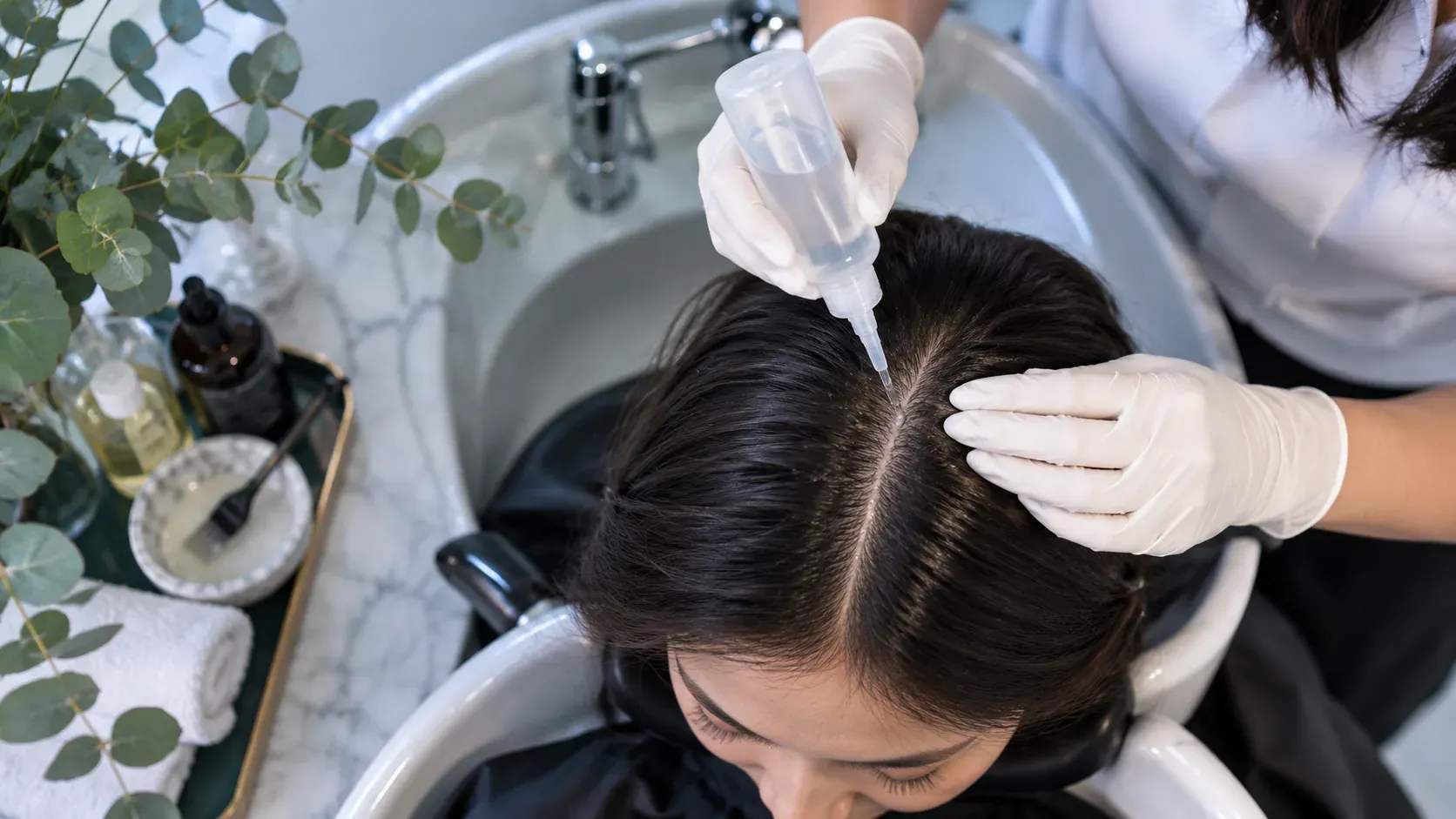
- Targeted serum or ampoule application - ingredients chosen based on your scalp's specific issue (oil-balancing, anti-fungal, soothing, or hydrating depending on need)
- Scalp massage - improves circulation to the follicles, which can support healthier hair growth over time
- Steaming or heat therapy (in some treatments) - helps active ingredients absorb more effectively
- Cooling or calming finish - especially for irritated or itchy scalps
The exact steps and products used vary by salon and by the specific scalp concern being addressed.
What Ingredients Typically Target What
| Concern | Ingredients Commonly Used |
|---|---|
| Oily scalp | Salicylic acid, tea tree oil, charcoal, clay-based cleansers |
| Dry, flaky dandruff | Hyaluronic acid, panthenol, soothing botanicals |
| Seborrhoeic (fungal-related) dandruff | Zinc pyrithione, ketoconazole-based products, tea tree oil |
| Itchy, sensitive scalp | Aloe vera, chamomile, allantoin |
| Weak or thinning hair alongside scalp issues | Biotin, peptides, caffeine-based stimulating serums |
A good salon will tailor the treatment combination to your scalp's actual condition rather than applying a single generic package to everyone.
How Often Should You Get a Scalp Treatment?
This depends on severity, but general guidance looks like this:
| Scalp Condition | Suggested Frequency |
|---|---|
| Mild oiliness or occasional flaking | Once every 4 to 6 weeks |
| Persistent oily scalp | Every 2 to 3 weeks initially, then maintenance monthly |
| Active dandruff or itchiness | Every 2 weeks until improved, then monthly maintenance |
| Preventive/general scalp health | Once every 6 to 8 weeks |
Results build over multiple sessions rather than from a single visit, particularly for chronic oiliness or recurring dandruff, since the goal is to rebalance the scalp environment over time, not just remove visible symptoms once.
At-Home Maintenance Between Salon Visits
Salon treatments work best when supported by consistent home care in between:
- Don't over-wash or under-wash. Washing too frequently can strip natural oils, triggering the scalp to overproduce oil in response. Washing too infrequently allows buildup to accumulate. Most oily scalps do well with washing every 1 to 2 days; adjust based on your activity level and climate exposure.
- Use a clarifying shampoo occasionally, once a week or every two weeks, to prevent product and pollution buildup, especially if you use styling products daily.
- Avoid conditioner directly on the scalp, applying it mid-length to ends instead, since heavy conditioners near the roots can contribute to oiliness.
- Brush regularly to distribute oils evenly and remove loose debris, using a clean brush to avoid reintroducing bacteria.
- Change pillowcases regularly, since oil and product residue transfer back onto hair and scalp overnight.
- Manage helmet and headscarf hygiene, airing out helmets and washing hijab underscarves regularly to reduce trapped heat, sweat and bacteria buildup against the scalp.
When to See a Dermatologist Instead
Salon scalp treatments can meaningfully improve common oiliness and mild-to-moderate dandruff, but certain signs suggest the issue needs medical rather than cosmetic attention:
- Thick, scaly patches that don't respond to regular treatment
- Significant hair loss alongside scalp symptoms
- Painful, inflamed, or bleeding areas on the scalp
- Symptoms that persist or worsen despite consistent salon and home care over several months
A salon stylist can flag these signs and suggest seeing a dermatologist, but scalp treatments are a cosmetic and maintenance service, not a substitute for medical diagnosis of underlying skin conditions.
Combining Scalp Treatments With Other Hair Services
If you're also dealing with hair concerns like frizz, dryness from chemical treatments, or considering colour or rebonding, scalp health matters more than most people realise. A congested, imbalanced scalp environment can affect how well hair grows and how healthy new growth looks, particularly relevant if you're managing regrowth after a chemical service or maintaining colour vibrancy, since a cleaner scalp generally supports better product absorption and healthier-looking hair overall.
Frequently Asked Questions
Can a scalp treatment cure dandruff permanently?
Most dandruff, especially the seborrhoeic type, tends to be a manageable, recurring condition rather than something "cured" once. Regular treatment and consistent home care keep it under control.
Will a scalp treatment help with hair loss too?
Improving scalp health can support a better environment for hair growth, but scalp treatments alone won't resolve hair loss caused by other factors like genetics or hormonal changes, which may need separate medical evaluation.
Is scalp treatment suitable for coloured or chemically treated hair?
Yes, though your stylist should be informed about recent chemical services so they can choose gentle formulations that won't strip colour or interfere with recent treatments.
How soon will I see results?
Oiliness often improves noticeably within a few sessions, while dandruff and flaking may take longer, typically several weeks of consistent treatment, to show clear improvement.
Final Thoughts
An oily scalp or persistent dandruff isn't just a hair-day inconvenience in Malaysia's climate, it's often the scalp responding to genuine environmental stress from heat, humidity, sweat and daily buildup. A proper salon scalp treatment, done consistently and paired with the right home care routine, can rebalance the scalp environment far more effectively than switching shampoo brands alone. If symptoms persist despite consistent care, a dermatologist referral is the next sensible step.