Nails
Why Peeling Off Gel Nails Damages Your Natural Nails
It's a satisfying little habit many Malaysians have picked up without realising the damage it causes: gel polish starts lifting at the edges, and…
Premium Old Skool Salon29 September 20267 min read
It's a satisfying little habit many Malaysians have picked up without realising the damage it causes: gel polish starts lifting at the edges, and instead of booking a proper removal appointment, you pick at it until it peels off in one piece. It feels harmless, even oddly therapeutic. Unfortunately, it's one of the most common reasons people end up with thin, brittle, peeling natural nails underneath, and often don't connect the two.
Here's what's actually happening to your nail plate when you peel off gel polish, why it's more damaging than it looks, and how to remove gel the right way without wrecking your nails in the process.
How Gel Polish Actually Bonds to Your Nail
Gel polish isn't like regular nail polish that simply sits on top of the nail and can be wiped off with remover. Gel is cured under UV or LED light, which creates a hard, plastic-like bond that adheres directly to the surface layers of your natural nail plate.
For that bond to hold up for two to three weeks without chipping, it needs to grip onto the nail's outer layers, sometimes helped along by a base coat that lightly buffs or etches the nail surface first for better adhesion. This is exactly why gel is so durable, and exactly why removing it forcefully causes damage.
What Actually Happens When You Peel Gel Off
When gel polish is peeled rather than properly dissolved and lifted, it doesn't detach cleanly from just the surface. Because the gel is bonded into the top layers of the nail plate, peeling pulls those layers away with it.
| What You See | What's Actually Happening |
|---|---|
| Nail looks "clean" after peeling | Top layers of the nail plate have been ripped away along with the gel |
| Nail feels thinner afterward | Multiple layers of keratin have been stripped, not just the polish |
| White patches or rough texture appear | Exposed, damaged nail bed is now visible |
| Nails peel in layers over following weeks | Ongoing damage from the initial forceful removal continues to shed |
| Nails feel weak, bendy or brittle | Structural layers that normally provide strength have been compromised |
Your natural nail plate is made of multiple thin layers of keratin, similar to how hair has layers of cuticles. Peeling gel doesn't just remove polish, it tears through several of these layers at once, which is why nails often look and feel noticeably thinner and rougher immediately after.
Why This Damage Takes So Long to Recover From
Unlike skin, nails don't repair damaged sections. A nail plate grows from the root (the matrix) outward, and any damage done to the visible nail plate stays there until it grows out completely. Nail growth is slow, averaging roughly 3mm per month for fingernails, meaning fully damaged areas can take three to six months to grow out entirely.
This is why repeated peeling creates a cycle: nails become progressively thinner and weaker with each cycle, making them more prone to breaking, splitting, and peeling even without gel polish involved.
Signs Your Nails Have Been Damaged From Peeling Gel
- Visible peeling or flaking layers on the nail surface, even without polish
- Nails that feel unusually thin, flexible or "bendy"
- White, opaque patches or rough texture across part of the nail
- Increased sensitivity or slight discomfort when nails are pressed
- Nails that used to grow smooth now growing in with ridges or unevenness
- Slower-than-usual nail growth, as the nail matrix works to recover
If several of these sound familiar, your nails are likely dealing with cumulative damage from repeated peeling rather than a single incident.
The Correct Way to Remove Gel Polish
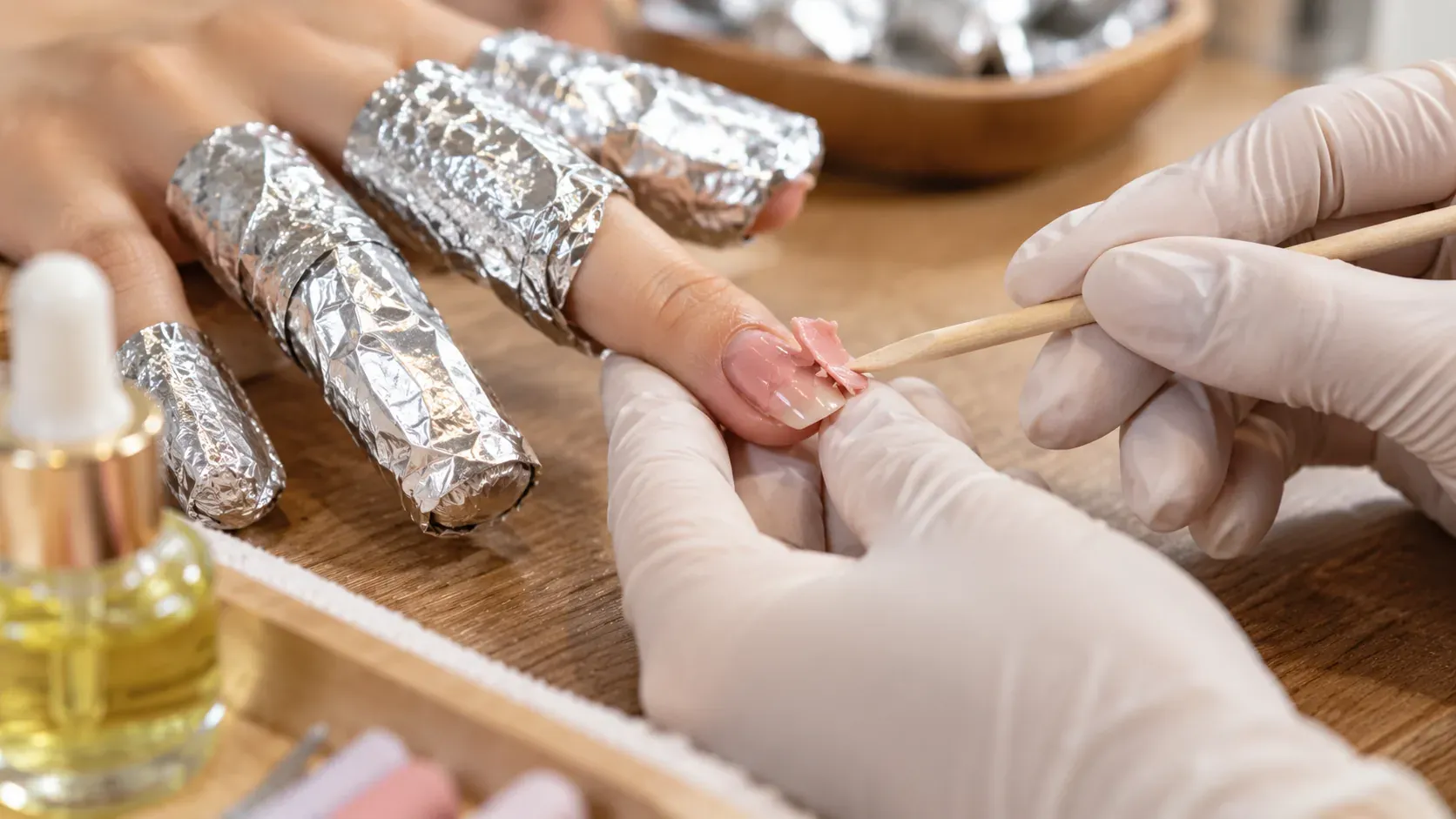
Proper gel removal focuses on dissolving the bond chemically rather than forcing it off mechanically. A typical salon removal process looks like this:
- Light buffing of the top gel layer to break the sealed surface, without buffing into the natural nail
- Acetone-soaked cotton pads applied to each nail
- Wrapping in foil to trap heat and keep the acetone in contact with the gel, which speeds up the softening process
- Waiting 10 to 15 minutes to allow the gel to fully soften
- Gently pushing off softened gel using a cuticle stick, never scraping or prying at resistant areas
- Light buffing and conditioning of the natural nail afterward to smooth any residue and rehydrate the nail plate
The entire point of this process is that the gel is chemically softened before any physical pressure is applied, which is precisely the step people skip when they simply pick and peel.
What to Do If You Notice Damaged Nails Now
If your nails are already showing signs of peeling or thinning from past habits, recovery is possible, it just takes consistency and patience.
| Recovery Step | Why It Helps |
|---|---|
| Take a break from gel polish | Gives the nail plate uninterrupted time to grow out damaged layers |
| Keep nails trimmed short | Reduces the chance of catching and further tearing weakened layers |
| Apply cuticle oil daily | Nourishes the nail plate and surrounding skin, supporting healthier growth |
| Use a strengthening base coat or treatment | Some formulas are specifically designed to reinforce weakened nails |
| Avoid using nails as tools | Opening cans, scratching labels, or peeling stickers stresses already fragile nails |
| Wear gloves for household chores | Reduces exposure to water and detergents that further weaken nail structure |
| Consider a nourishing manicure treatment | A salon-based nail treatment can help condition and strengthen nails during the recovery period |
Recovery typically takes a few months of consistent care, matching the natural growth cycle of the nail, so patience matters more than any single product.
Can You Still Get Gel Manicures After Damage?
Once nails have recovered some strength and thickness, gel manicures can be resumed, but a few adjustments help prevent repeating the cycle:
- Always have gel professionally removed rather than peeling it at home, even if it's starting to lift
- Ask your nail technician to check nail condition before reapplying gel if you've had recent damage
- Consider spacing out gel applications with occasional breaks using regular polish or bare, conditioned nails
- Communicate with your technician if you notice lifting early, rather than waiting until it's peeling on its own, since early lifting can often be addressed with a proper fill or removal before it worsens
Why the Temptation to Peel Happens in the First Place
Gel often starts lifting at the edges before the full manicure is due for removal, especially in Malaysia's humid climate where moisture and daily hand-washing can affect how gel holds over time. This lifting edge becomes an easy target to pick at, and once one small piece comes off cleanly, it's tempting to keep going. Recognising this pattern is often the first step to breaking the habit, since the urge to peel usually starts small and escalates from there.
Final Thoughts
Peeling gel polish off at home might feel quick and satisfying at the moment, but it strips away real layers of your natural nail plate every single time, leading to thin, weak, damage-prone nails that take months to fully recover. The safest, and ultimately faster, route to healthy nails is proper acetone-based removal, ideally done at the salon, paired with consistent aftercare between manicures.
Frequently Asked Questions
Is it really that much worse than using nail polish remover?
Yes. Regular polish sits on the surface and dissolves away cleanly with remover. Gel is bonded into the nail's top layers, so removing it without proper acetone soaking pulls those layers away rather than just the colour.
How long does it take for nails to recover after peeling gel?
Since nail plates don't repair themselves, full recovery depends on growth, typically three to six months for the damaged section to grow out completely, with consistent care.
Can a nail technician fix already-peeling nails?
A technician can gently buff and smooth existing damage and recommend strengthening treatments, but the underlying nail plate still needs time to grow out and thicken naturally.
Is soak-off gel less damaging than peeling regular gel?
Soak-off gel formulas are generally designed to be removed more easily with acetone, but they still require proper soaking and gentle removal rather than peeling to avoid damage.